Compare Bed Bug Treatments: Coverage, Residual and Risk
See heat, steam, sprays, dusts and DIY side by side, because no single method suits every home. Each one gets the same checks for reach, residual action and safety limits.
Read the guide →Every method has a job, a coverage limit and a safety requirement. Compare what it can reach, whether it leaves residual action and how you will verify the result.
No charge to send an enquiry · Analytics only with your consent · Methods compared on evidence, not payment
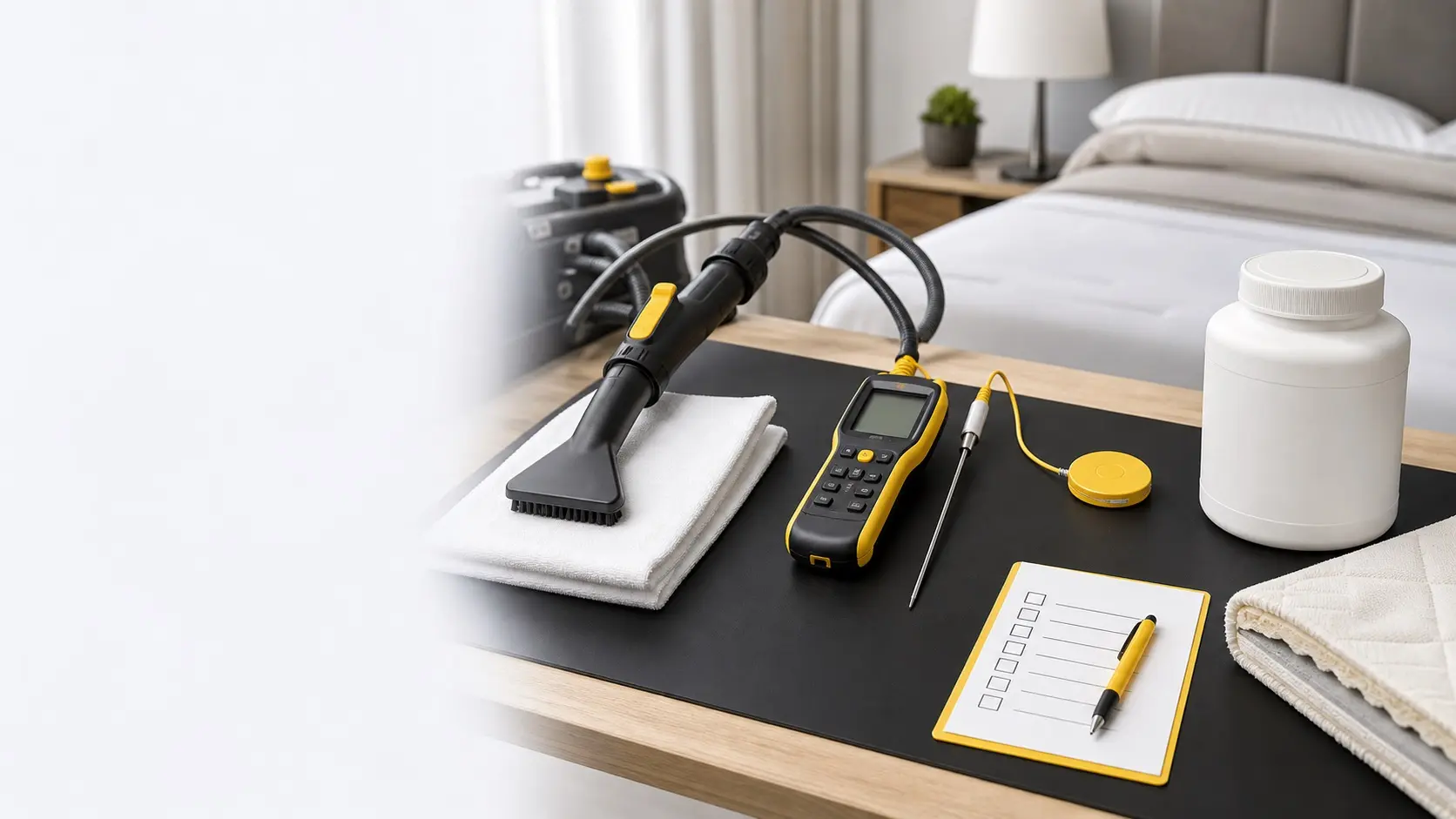
Start with the decision you need to make now. Each guide states its evidence, limits and next action.
See heat, steam, sprays, dusts and DIY side by side, because no single method suits every home. Each one gets the same checks for reach, residual action and safety limits.
Read the guide →Heat works through time as well as temperature. However, it only helps where the heat actually arrives.
Read the guide →Steam only kills what it touches, so reach and technique matter. See where a steamer helps and where it still leaves gaps.
Read the guide →Identification, treatment and follow-up are different decisions. Keeping them separate makes quotes clearer and evidence easier to compare.
Use specimens, spotting, cast skins and harbourage evidence rather than bites alone, because a bite reaction can come late. The NHS also lists blood spots and small brown spots on bedding as signs.
Match the method and room scope to what inspection supports. Then read each product label before use.
Define follow-up, monitor consistently and record new observations. Then compare the results with your first evidence map.
These short posts sit beside the method guides. Each one answers a single question and lists its sources.
Heat needs time as well as temperature, because eggs need more heat than adults. Read how long bed bug heat treatment takes to see what shapes the length of a visit.
Preparation matters because some services will not treat an unprepared room. Follow our guide to preparing a room for treatment before your provider arrives.
A steamer is easy to buy. However, it only kills what its heat reaches. Learn what steaming a mattress can and cannot reach before you buy or hire one.
You cannot judge a treatment by feel alone, because bites and itching are poor evidence. Interceptor traps and monitors give you counts that you can compare from week to week.
The NHS advises a 60C wash and a hot tumble dry of at least 30 minutes for affected items. Our post on washing and tumble-drying clothes and bedding covers the details.
11 focused guides cover treatment methods, safety and aftercare. Each one ends with the sources behind its claims.
Use the enquiry form below and we will pass your details to a pest control professional who covers your area. There is no charge for sending an enquiry, and it never changes how we compare methods.
Tell us what you have seen and where, and a vetted pest control professional who covers your area will contact you. Our privacy notice explains what happens to your details, while our about page explains how the site works.